A practical, no-hype walkthrough for launching a motivation page on Instagram, TikTok, or YouTube Shorts without ever showing your face, from someone who runs faceless pages for a living.
Learning how to start a faceless motivation page is one of the few ways to grow a real audience without a camera, a personal brand, or any editing background. The demand for motivational content never expires, the format is simple, and nobody needs to know who runs the account.
That is also why so many people start one. And why so many quit within the first month.
I have grown accounts in this niche past 50,000 followers on TikTok, and I have also lost an account with a large following to a single copyright claim. This guide covers everything I would do if I had to start a faceless motivation page from zero today, in the order I would do it, including the mistakes that end most pages before they get going.
What is a faceless motivation page?
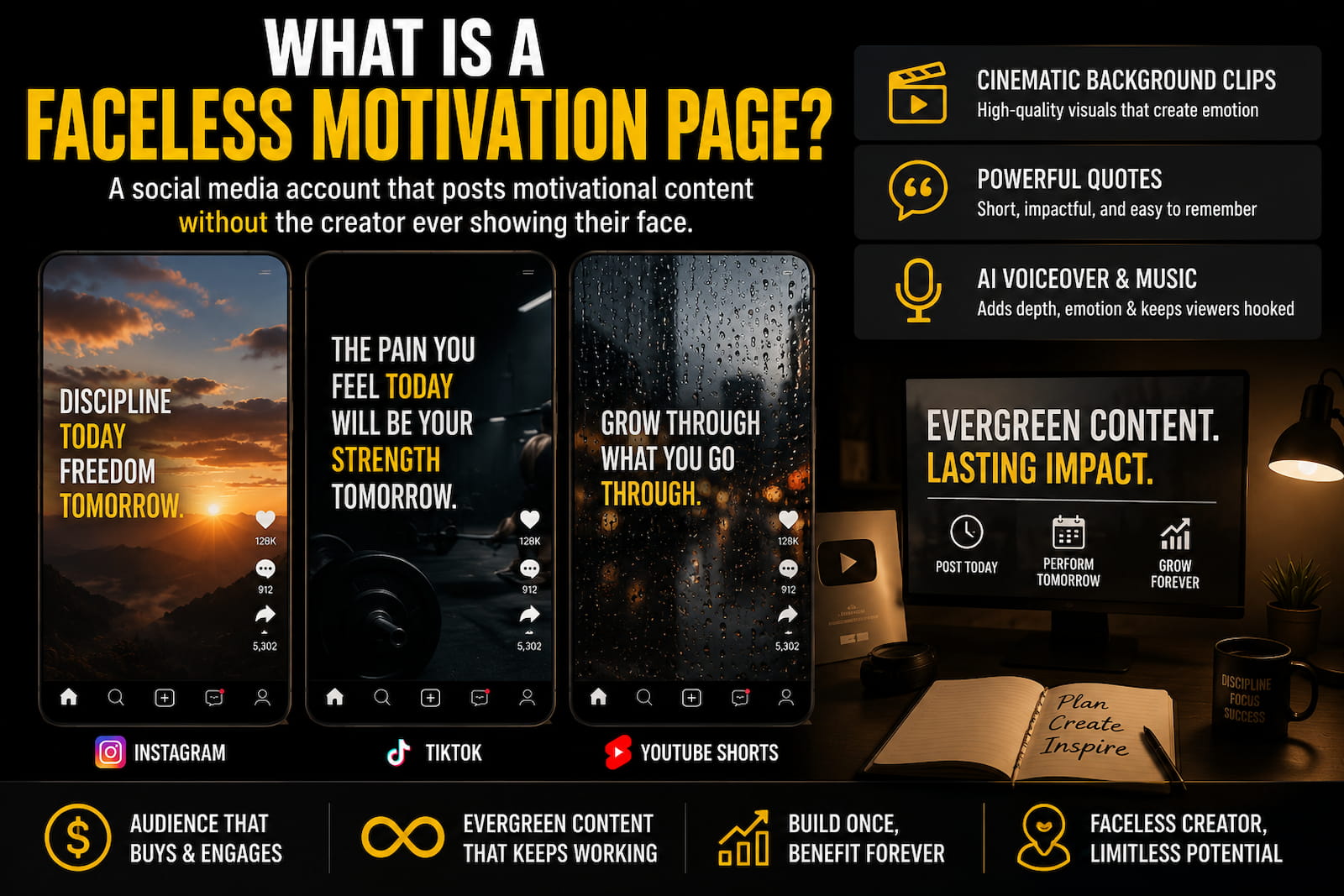
A faceless motivation page is a social media account that posts motivational content, usually short vertical videos or quote posts, without the creator ever appearing on camera. The typical video combines a cinematic background clip, motivational quotes as a text overlay or an AI voiceover, and an emotional music track.
You have seen hundreds of these theme pages on Instagram, TikTok, and YouTube Shorts: sunrise footage with a line about discipline, gym clips with a hard-hitting voiceover, rain on a window with a message about resilience. Someone runs every one of them, and successful faceless creators almost never show their face.
The model works because motivation is a niche where people already spend money and attention, and the content is evergreen. A good clip posted two years ago still performs today, which almost no other short-form format can claim.
Step 1: Pick a niche and focus on one platform
Start by narrowing the niche. “Motivation” alone is too broad to build a recognizable page around, so pick a lane: gym and discipline, entrepreneur mindset, stoicism, morning routines, motivation for students. One niche makes your page easier to remember, gives you endless content ideas within a clear boundary, and helps the algorithm categorize you. Overthinking this step is common; any of those lanes works, so choose the one you can talk about for a year.
Then focus on one platform. Instagram, TikTok, and YouTube Shorts all suit this model, and the same vertical video runs on all three, but your daily attention should live in one place while the other two receive reposts. If your long-term plan is selling a digital product or earning through affiliate links, a faceless Instagram account gives you the strongest link options. If you want the fastest reach from a brand-new account, TikTok still has the most generous discovery. YouTube Shorts grows slowest but compounds the longest.
One format, one niche, one platform. That focus is what separates pages that grow faster from pages that scatter.
Step 2: Set up your faceless Instagram or TikTok page properly
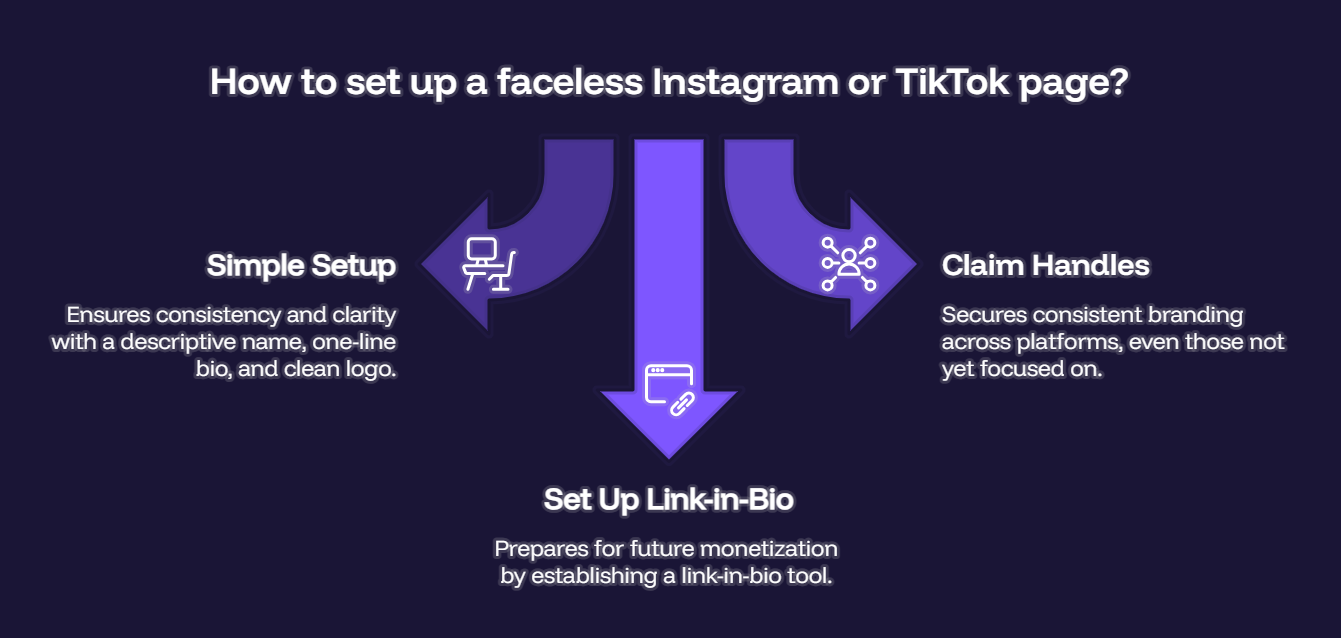
Keep the setup simple and consistent. Choose a name that says what the page is about (discipline.daily beats an inside joke every time), write a one-line bio that promises a clear outcome, and use a clean, high-contrast logo or text mark as the profile image. Canva does this in ten minutes for free.
Two small things matter more than beginners expect. First, claim the same handle everywhere now, even on the platforms you will not focus on yet. Second, set up a link-in-bio tool from day one, even if it only points to a newsletter signup. When monetization starts, you want the plumbing already in place.
Step 3: Build a content library before you start posting
This is the step almost everyone skips, and it is the single biggest reason faceless Instagram and TikTok pages die in week three.
The default path looks like this: get excited, start posting daily, spend an hour on each video, get almost no views (completely normal for a new account), and quietly give up because content creation every single day next to a job and a life is exhausting. The page did not fail because the niche is saturated. The creator ran out of energy before the algorithm had time to notice them. The pain point was never ideas. It was daily production.
The fix is to solve your content supply before you publish your first post. Build or buy a library of ready-to-use clips, enough for at least a month of daily posting, so the daily question changes from “what do I make today?” to “which clip goes out today?”
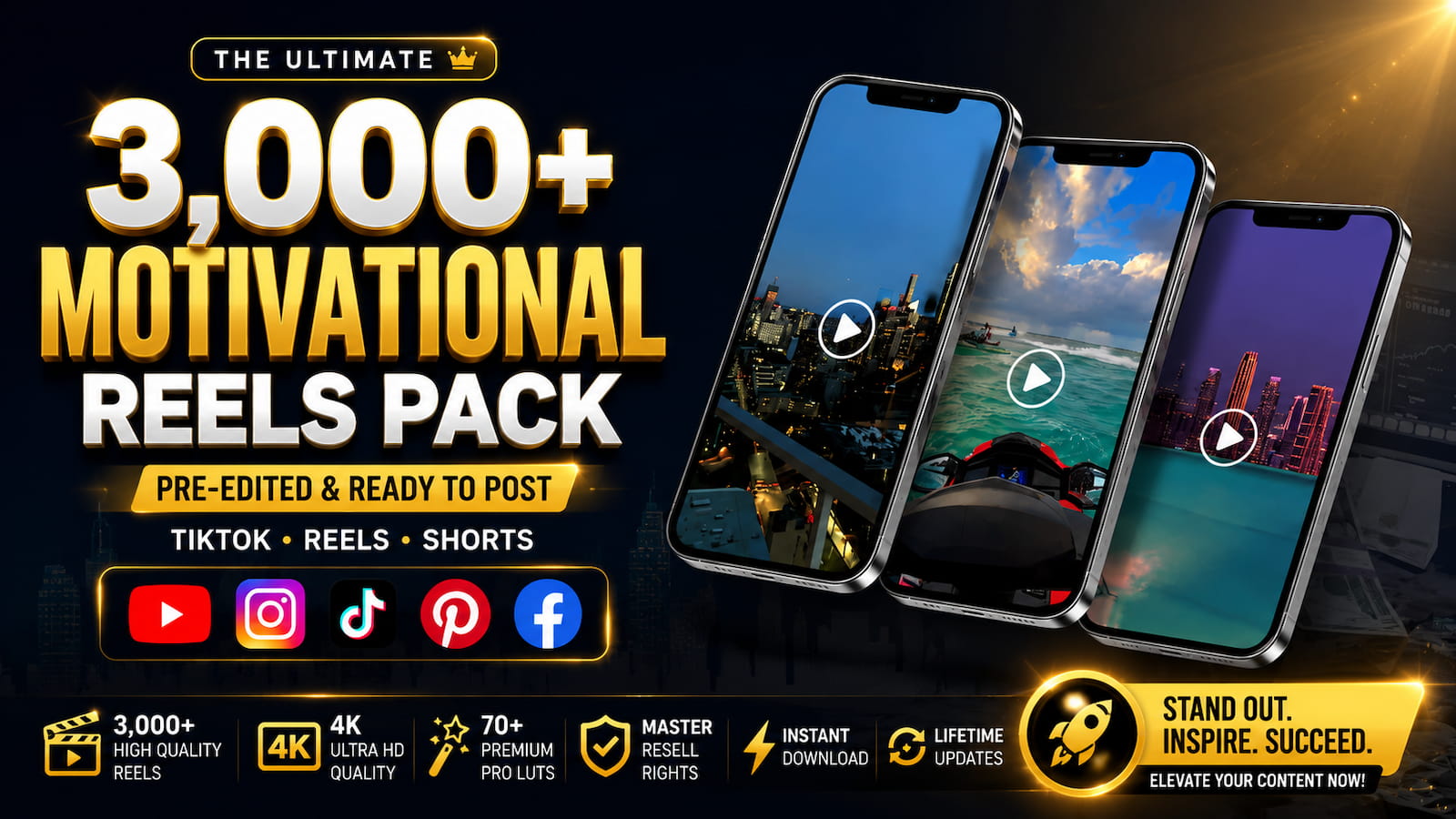
You can build a faceless content library yourself from licensed stock footage and original text, which is free but slow. Or you can start from a curated collection and customize from there. I put together the library I use myself, a pack of 3,000+ ready-to-use motivational reels organized for exactly this workflow: 3,000+ Motivational Reels Pack. Either route works. The only wrong option is starting with seven clips and good intentions.
Step 4: Learn what makes engaging content in this niche
Volume without content quality just fills your page with noise, so it helps to know what separates the top posts from everything else.
Four things do most of the work. The first frame decides everything, because viewers give you about half a second before swiping, so the opening visual or first line has to stop the thumb. Text must be instantly readable, meaning large, high-contrast, and short. Length should sit around fifteen to thirty seconds so the video loops, and loops are what push a clip toward going viral. And the music has to match the emotion of the message, because the wrong track flattens even great footage.
Simple content built on those four rules beats clever content that ignores them. Run every clip through the checks before it goes out, and run the samples of any content pack through the same checks before you buy.
Step 5: Batch, schedule, and post consistently
Consistent posting is the one thing the algorithm reliably rewards in this niche, and batching is how normal humans manage it.
Block one afternoon. Pick fifteen to twenty clips from your library, write the captions, and load everything into a content calendar. Meta Business Suite is free for Instagram, TikTok has native scheduling, and tools like Buffer or Later cover all three platforms at once. From that point your page posts daily whether you are busy, tired, or uninspired, and your daily involvement drops to a few minutes of replying to comments.
Repurpose the same batch across platforms, and mix in the occasional quote page or carousel posts on Instagram between videos. One afternoon of work can feed three accounts for two weeks, which is the entire content strategy in one sentence.
[Suggested placement: email opt-in box here. Offer: a free starter set of reels or your posting-calendar template in exchange for an email address.]
Step 6: Use original or licensed content only
I learned this one the expensive way. One of my accounts, with a following that took months to build, was permanently removed after a copyright claim. There was no appeal and no recovery, and it completely changed how I source content.
The two habits that put pages at risk are ripping clips directly from other faceless creators and using trending commercial songs without rights. Both work fine right up until one report erases everything. Whatever you post, make sure you are allowed to use it: licensed stock footage, curated content with proper commercial usage rights, original content you made yourself, and platform audio libraries are all safe ground. A smaller page that survives is worth infinitely more than a popular faceless page that disappears overnight.
Step 7: Monetization methods once the page grows
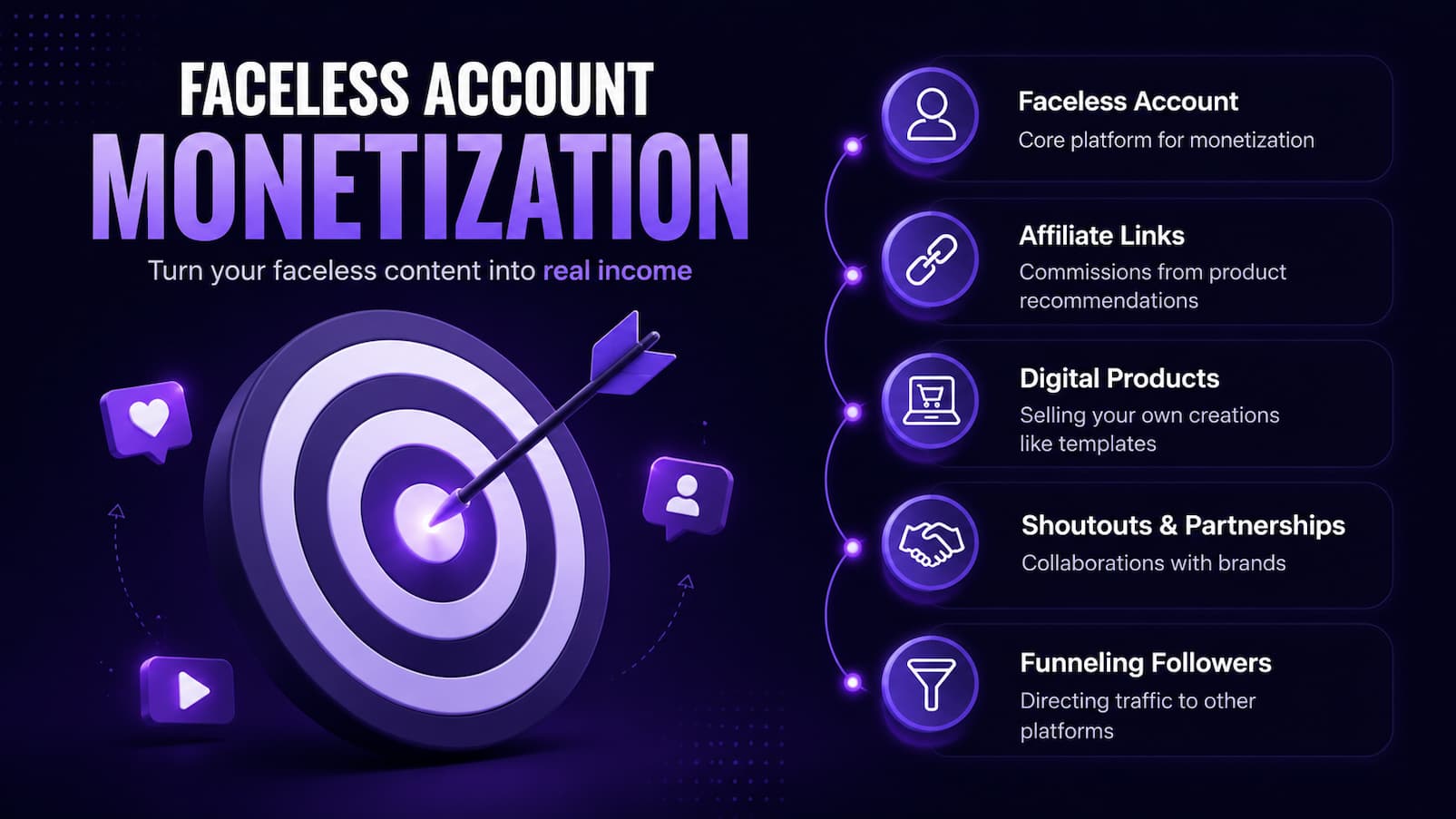
Do not try to monetize at 200 followers. Post consistently until the account shows real traction, which for most pages means a few thousand engaged followers and steady views. You do not need 10k followers to start earning, but you do need proof the page is alive.
From there, faceless accounts make money through a handful of monetization paths: affiliate links in the bio, selling a digital product of your own (templates, guides, or content packs), shoutouts and brand partnerships, and funneling followers to a newsletter or YouTube channel that earns elsewhere. The pages that earn the most treat the account as the top of a funnel rather than the business itself, which is exactly why the link-in-bio setup in Step 2 matters early.
Free AI tools that make faceless content creation easier
You need surprisingly little software for this model, and most of it costs nothing to start.
CapCut handles trimming, captions, and text overlays. Canva covers logos, quote graphics, and carousel templates. Pexels and Pixabay offer licensed stock footage that is safe to build on. If you want narration without your own voice, AI voice tools like ElevenLabs generate natural-sounding voiceovers from a script, and many creators use a free trial to test whether voiceover content suits their page. ChatGPT or any AI assistant speeds up caption writing and hook ideas when you are batching.
None of these use AI tools as a gimmick. They exist to remove the production friction that kills most pages, which has been the theme of this entire guide.
Your first 30 days: what to expect
Set expectations by months, not weeks. The first 30 days usually deliver very little, because new accounts start with zero distribution and the algorithm needs a body of work to evaluate. Growth in this niche arrives unevenly: long flat stretches punctuated by one or two clips that suddenly travel.
The practical target is not a follower number. It is still posting in month three. Most of your competition quits long before that, and the accounts that survive the boring middle stretch are the ones the algorithm eventually rewards. That is why Step 3 is the heart of this guide: the pages that last made daily posting nearly effortless before they started.
Frequently asked questions
Can you really grow a motivation page without showing your face? Yes. The niche is built on faceless content, and viewers follow the feeling the page delivers, not the person behind it. An AI voice or plain text-plus-music works fine without anyone on camera.
Do I need video editing skills to start? No. If you work from a ready-made clip library, the editing is already done, and CapCut covers any small tweaks for free. The skill that matters is consistency, not editing.
Is the faceless motivation niche too saturated in 2026? It is crowded, and it keeps working anyway, because demand for motivational content is enormous and constantly refreshing. Crowded is not the same as closed. The real filter is that most new pages stop posting within a month.
How often should a faceless motivation page post? Once a day is the standard that balances growth and sustainability. Daily posting is far more achievable when your content is batched and scheduled in advance rather than produced from scratch each morning.
How do faceless motivation pages make money? Mainly through affiliate links, digital products, shoutouts and brand partnerships, and funneling followers to a newsletter or YouTube channel. Monetization works best after the page shows consistent engagement, not from day one.
How to start a faceless motivation page: the short version
Everything above compresses into one principle: build the machine before you ask it for results. Pick a niche, prepare a month of content before your first post, schedule it, stay legal, and keep showing up while everyone who started the same week disappears.
If you want to skip the longest part of that setup, the same library I use is here: 3,000+ ready-to-use motivational reels with commercial usage rights, organized so a single afternoon of batching covers weeks of posting: 3,000+ Motivational Reels Pack.
Build the system first. The audience is what the system produces.